Indonesia Stock Market Today: IHSG Falls 0.92% to 5,146 as Asian Shares Slide
4 minutes reading

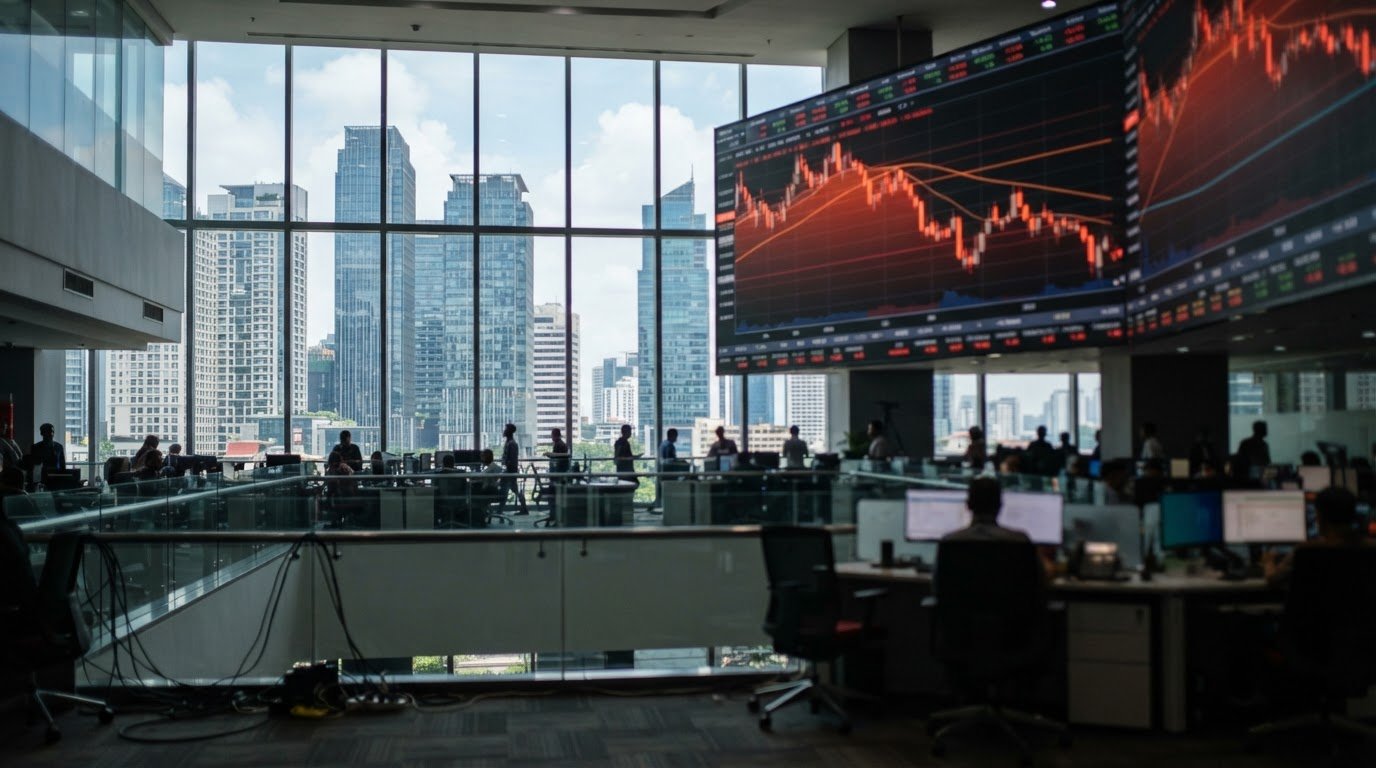
JAKARTA, November 21, 2026 — Indonesia’s stock market ended its latest trading session lower, with the Jakarta Composite Index (IHSG) falling 0.92% to 5,146.33 on Friday, November 20. The decline came as most major Asian markets also closed in negative territory, leaving investors cautious heading into the weekend.
Because the Indonesia Stock Exchange is closed on Saturday, the Friday closing figures are the latest completed market data available today. The index lost 47.81 points during the session, while total market transactions reached around IDR 8.08 trillion, according to the government’s daily market report.
IHSG closing figures: What happened on Friday?
The IHSG opened at 5,152.16 and moved between 5,094.89 and 5,196.28 before settling at 5,146.33. Trading volume reached approximately 20.97 billion shares.
The broader market was under pressure. Nine of the eleven domestic sector groups recorded losses in the government’s market summary. Energy shares fell 1.42%, while non-primary consumer stocks declined 1.26%. Healthcare was among the few sectors to advance, gaining 0.81%, followed by infrastructure with a 0.10% increase.
Asian markets add to investor caution
Indonesia’s decline followed a weak session across much of Asia. The government’s report recorded sharp losses in several regional markets, including Taiwan and South Korea. The Nikkei, Hang Seng and Shanghai Composite also ended lower, reflecting a broad pullback in regional risk appetite.
Market sentiment has been affected by concerns over global interest rates, technology valuations and the outlook for large artificial-intelligence investments. Investors are weighing whether the heavy spending on AI infrastructure will translate into profits quickly enough to justify current valuations.
Rupiah and bond yields remain important signals
The rupiah also weakened on Friday, closing at around IDR 18,268 per US dollar, down 0.13% on the day, according to the government’s market report. Indonesia’s 10-year government bond yield rose by 4.20 basis points to 7.75%.
Currency movements and bond yields matter to stock investors because they can influence foreign fund flows, corporate borrowing costs and the valuation of companies with significant foreign-currency exposure. A weaker rupiah may also increase costs for businesses that rely on imported materials or equipment.
What should stock investors watch next week?
Investors will be watching developments in global interest-rate expectations, the rupiah’s direction and any new information that could affect confidence in Indonesia’s capital market. Company earnings, debt levels and cash flow will remain important when assessing individual shares.
Rather than reacting to a single day of market movement, investors may want to review whether a company’s business outlook has changed. A falling index does not mean every listed company has become less valuable, just as a short-term rebound does not automatically signal a lasting recovery.
Is this a buying opportunity?
A market pullback can create opportunities, but it can also reflect risks that have not yet been fully priced in. Investors should check a company’s latest financial statements, valuation, cash generation, debt and business prospects before making a decision.
For beginners, spreading investments across different assets and avoiding the use of emergency savings for stock trading can help manage risk. Short-term price movements are difficult to predict, and no market level guarantees a profit.
For now, the latest IHSG close points to a cautious market mood. The next sessions will show whether buyers return or investors continue to reduce exposure amid uncertainty at home and abroad.
Disclaimer: This article is for news and general information purposes only. It is not a recommendation to buy or sell any stock. Investors should conduct their own research and consider their financial circumstances and risk tolerance.
Sources
Related posts


18 Nov 2026



06 Nov 2026
Latest Post