South Korea Faces New Exam Integrity Challenge as AI and Smartphone Cheating Raise Concerns
3 minutes reading

News - 21 Nov 2026
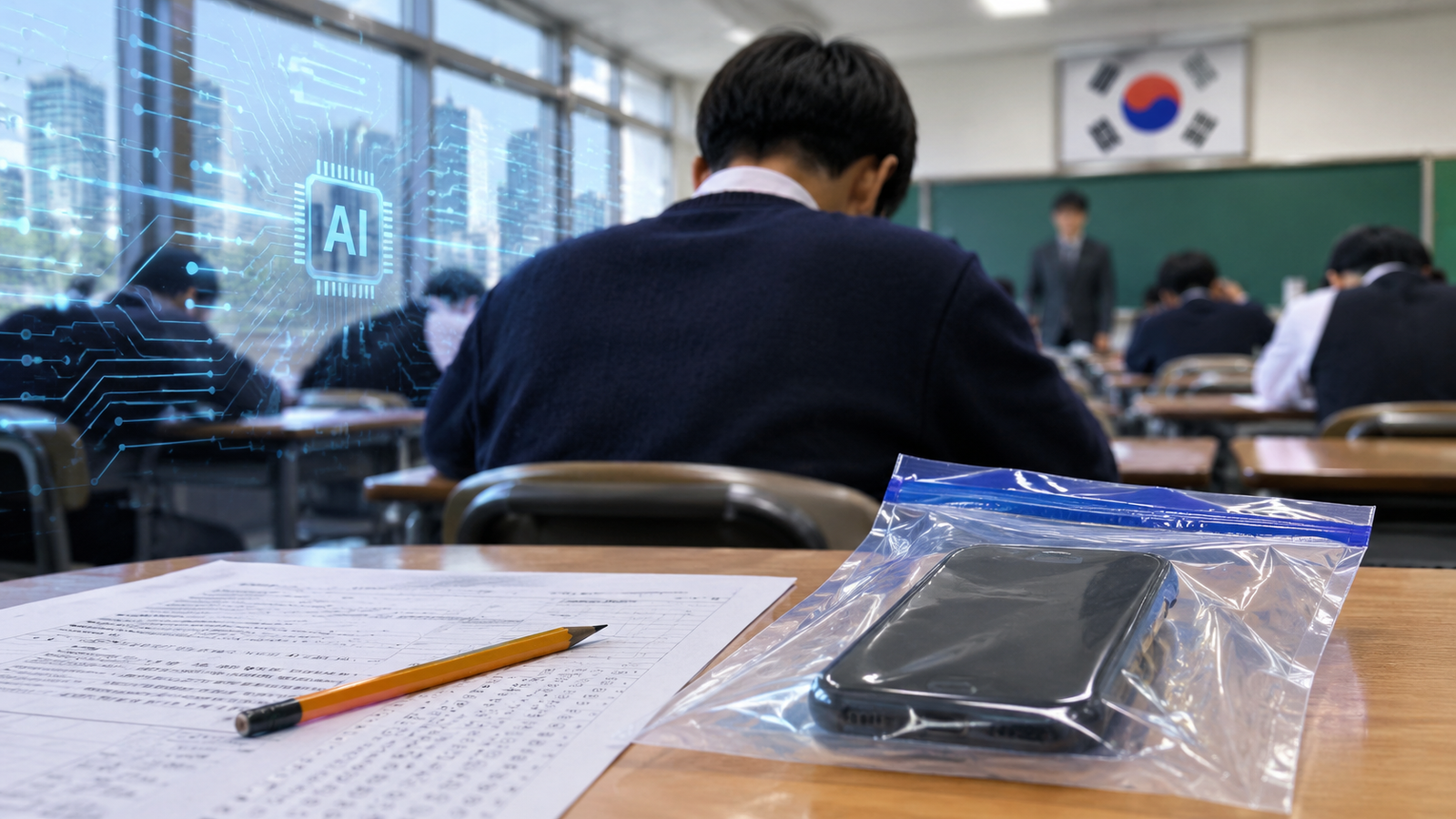
South Korea is facing fresh questions about academic honesty after a series of exam-related controversies brought the use of technology in education into the spotlight.
The issue has attracted public attention following reports that 111 students were caught carrying prohibited smart devices during this year’s College Scholastic Ability Test (CSAT), South Korea’s highly competitive university entrance examination.
The incident has added pressure on education authorities and universities to strengthen examination security, especially as artificial intelligence and digital devices become increasingly accessible.
Why Is Exam Security Becoming a Major Issue?
The CSAT is one of the most important examinations in South Korea. Its results can have a major influence on students’ chances of entering their preferred universities.
Because of the high stakes, examination rules are strict. Students are not allowed to bring certain electronic devices into examination rooms.
However, the latest incident involving 111 students has raised questions about whether existing security procedures are sufficient in an era when technology is developing rapidly.
According to a report by SBS News on November 21, universities were urged to strengthen supervision as essay and interview examinations began.
Artificial Intelligence Adds a New Layer of Concern
Smartphones are no longer the only technology creating challenges for examination authorities.
Artificial intelligence tools can now generate answers, explain complicated subjects and process information within seconds.
While these tools offer significant benefits for learning, they also create new challenges when students use them in situations where outside assistance is prohibited.
Education authorities are therefore facing a difficult task: allowing students to benefit from technological progress while protecting the fairness of academic assessments.
What Could Change in South Korea’s Education System?
The growing debate could encourage schools and universities to reconsider how examinations are conducted.
Possible measures include stronger identity checks, clearer rules on electronic devices, improved examination supervision and updated policies covering AI-assisted academic misconduct.
However, stronger security alone may not solve the problem.
Educational institutions may also need to rethink how they evaluate students, placing greater emphasis on critical thinking, individual understanding and the ability to explain answers independently.
A Bigger Question Beyond South Korea
South Korea’s experience reflects a challenge that many education systems around the world may eventually face.
As AI becomes part of everyday life, traditional examinations must adapt to a world where information is easier to access than ever before.
The central question is no longer simply whether students can find the correct answer.
It is whether they genuinely understand the answer and can demonstrate their own knowledge.
For South Korea, protecting the credibility of its education system will require a balance between technological innovation, fair assessment and academic responsibility.
Related posts




14 Nov 2026


Latest Post



No Comments