
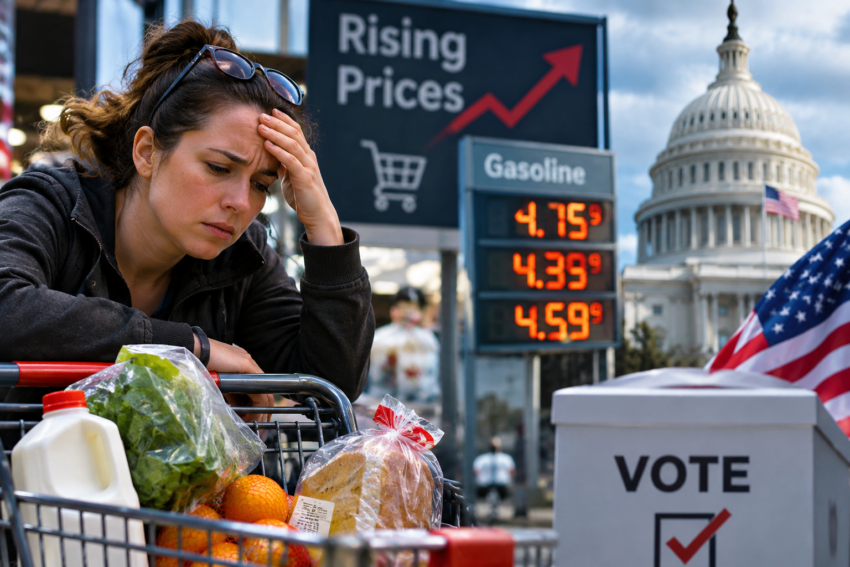
WASHINGTON, D.C. — America’s growing cost-of-living crisis is emerging as one of the biggest challenges facing the country’s political leadership, following a dramatic shift in the 2026 midterm elections.
For millions of American households, the economic debate is no longer simply about inflation figures, stock market performance or government spending. It is increasingly about whether ordinary workers can afford groceries, fuel, housing, healthcare and other basic necessities without putting additional pressure on their finances.
The latest election results have brought these concerns into sharper focus. Democrats are projected to take control of both chambers of Congress, marking a significant political setback for President Donald Trump and his Republican allies.
The outcome suggests that economic dissatisfaction has become a powerful force in American politics, potentially reshaping the country’s policy priorities over the next two years.
Rising Everyday Expenses Become a Political Turning Point
The affordability debate has become particularly difficult for American policymakers because it affects nearly every part of household spending.
Higher fuel prices can increase transportation costs, while expensive housing and healthcare leave families with less money for savings, education and other essential expenses.
According to Reuters’ reporting on the 2026 midterm results, nearly nine in ten voters considered the cost of living a major factor in their decisions at the ballot box.
The findings underline how economic pressures have moved beyond traditional political arguments and become a direct concern for American families.
For voters, economic performance is increasingly measured by what remains in their bank accounts after paying monthly bills.
Fuel Prices Add Pressure on American Families
Energy costs have become another important part of the affordability debate.
Gasoline prices are particularly sensitive because they influence not only household transportation budgets but also the cost of moving goods across the country.
CBS News reported that the national average gasoline price reached approximately $4.15 per gallon on Election Day, November 3, 2026, the highest level recorded for an Election Day in the United States.
For commuters and workers who depend on private vehicles, higher fuel costs can quickly reduce disposable income.
Businesses that rely on transportation may also face additional operating expenses, potentially passing some of those costs on to consumers.
This creates a wider economic challenge: when energy becomes more expensive, the financial impact can extend well beyond the gas station.
A New Political Challenge for Washington
The projected Democratic victories in both chambers of Congress could change the political environment surrounding Trump’s economic agenda.
With Democrats expected to gain greater influence over the legislative process, negotiations over federal spending, taxation, healthcare and economic policy could become more complicated.
However, a change in congressional control does not automatically guarantee lower prices.
Inflation, energy markets, housing supply and healthcare costs are influenced by multiple factors, including global economic conditions and domestic policy decisions.
The next Congress will therefore face pressure to demonstrate that political promises can translate into practical improvements in household finances.
American Households Want More Than Economic Promises
One of the biggest challenges facing Washington is the growing gap between broad economic indicators and how people experience the economy in their daily lives.
A strong financial market does not necessarily mean that a family can comfortably afford rent, groceries or medical bills.
Likewise, economic growth may offer limited reassurance to households that continue to struggle with rising monthly expenses.
This disconnect could become a defining issue in the next phase of American politics.
For both political parties, the challenge is no longer simply convincing voters that the economy is moving in the right direction. They must also show how their policies can make everyday life more affordable.
What Comes Next for the US Economy?
The coming months will be an important test for Washington as lawmakers confront competing priorities and growing public expectations.
Americans will be watching whether the new political balance produces meaningful action on housing affordability, energy costs, healthcare expenses and inflation.
The midterm election results have delivered a clear political message: economic security remains central to the concerns of ordinary voters.
For the Trump administration and the incoming Congress, the question is whether they can turn that message into policies that deliver measurable improvements.
Ultimately, America’s economic debate will not be decided solely by political speeches or election victories. For many households, the real measure of success will be much simpler: whether their paychecks can finally keep up with the cost of living.