
South Korea Faces a New Exam Challenge as AI Cheating Cases Raise Alarm
3 minutes reading

News - 20 Nov 2026
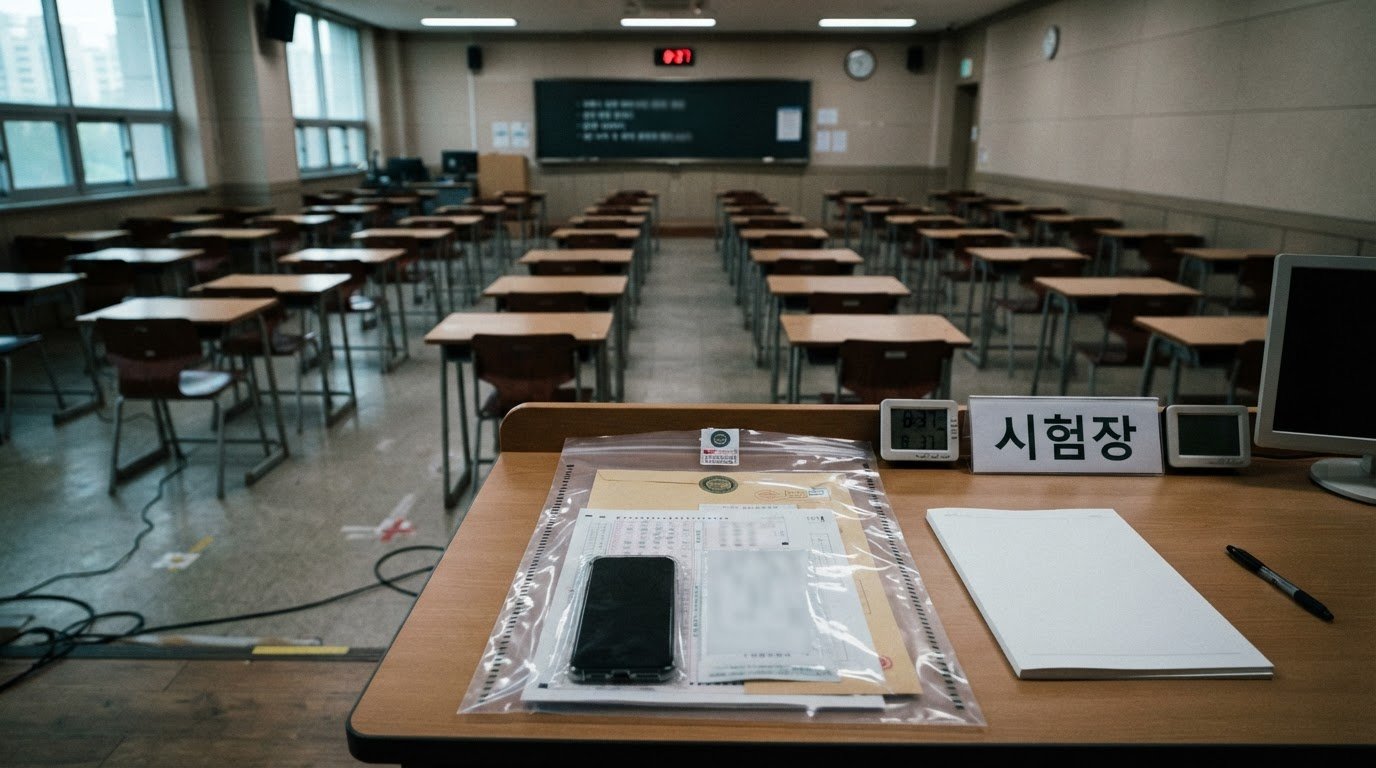 Illustrative image: academic integrity and the use of smart devices in South Korea’s university entrance exams.
South Korea’s university entrance exam season has been shaken by a growing debate over technology, fairness and academic trust. Authorities say 111 students were caught with prohibited smart devices during this year’s College Scholastic Ability Test (CSAT), while separate cases involving the use of artificial intelligence to cheat in professional examinations have added to public concern.
The issue has become one of the country’s major talking points on Saturday, November 21, as universities begin their essay and interview examinations. The Ministry of Education has urged institutions to strengthen supervision, but schools are facing a difficult question: how can they keep exams fair when digital tools are becoming smaller, smarter and harder to detect?
Why the 111-device figure matters
The 111 cases relate to students found with smart devices that are not allowed inside the CSAT examination rooms. The figure has renewed attention on the strict rules surrounding South Korea’s highly competitive university entrance process.
For many families, the CSAT is more than an ordinary school test. Its results can influence university options and future career paths. That pressure helps explain why even a small number of rule violations can quickly become a national concern.
AI is changing the nature of exam supervision
The debate is not limited to smartphones or other devices. Recent reports have also described cases in which candidates used generative AI to obtain help during professional qualification exams. These incidents have raised questions about whether existing examination rules are keeping pace with technology.
AI tools can produce answers, explain complicated ideas and process information in seconds. That makes them useful for learning, but potentially problematic when candidates use them in a test where independent knowledge is being assessed.
Investigators are also looking at whether wireless signals and other digital traces can help clarify suspected misconduct. Such methods may support an inquiry, but they need careful handling: a technical signal alone should not be treated as proof that a student cheated.
Universities face a practical dilemma
Stronger checks may help prevent cheating, but they can also make examination days more stressful for students and staff. Universities must balance effective supervision with clear procedures, respect for privacy and equal treatment for every candidate.
Clear instructions are especially important. Students should know in advance which devices are prohibited, where they must leave personal belongings and what happens if a rule is broken. Consistent procedures can reduce confusion and help prevent disputes after results are announced.
The bigger issue is public trust
The latest cases point to a challenge that reaches beyond South Korea. As AI becomes part of everyday life, schools and examination bodies around the world will have to decide when its use is acceptable and when it undermines the purpose of a test.
Technology alone will not solve the problem. Effective rules, trained supervisors, transparent investigations and fair appeal procedures are just as important. Students also need guidance on the difference between using AI as a learning assistant and relying on it to misrepresent their own ability.
South Korea’s exam controversy is therefore about more than devices found in examination rooms. It is a test of whether a high-pressure education system can adapt to a digital age without losing the trust that makes its qualifications meaningful.
Sources: SBS News, “Morning Wide: Today’s Major News” (November 21, 2026); SBS reporting on the investigation into suspected exam misconduct. This article is an original synthesis and analysis based on publicly reported information. The image is an AI-generated illustration.
Related posts





Latest Post



No Comments