
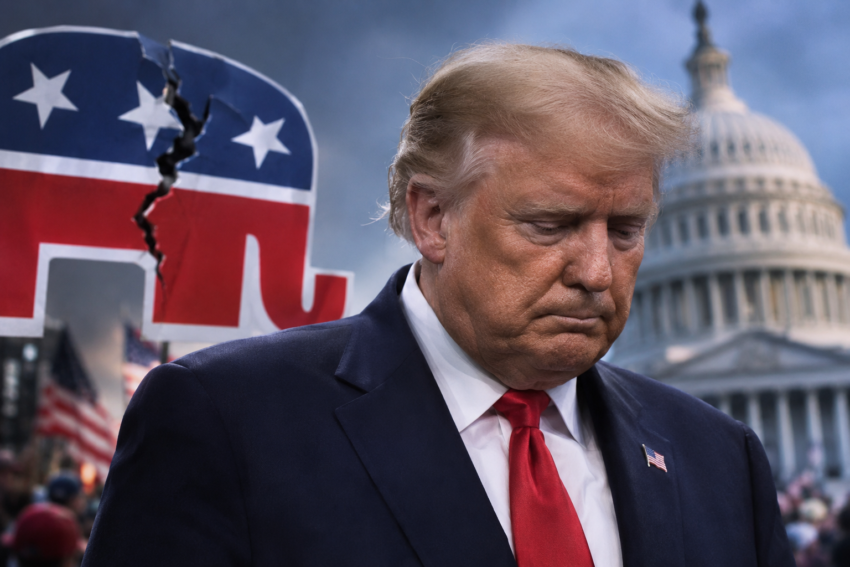
The Republican Party is facing one of the most damaging electoral setbacks in modern American political history after Democrats secured control of both chambers of Congress in the November 3 midterm elections.
The scale of the defeat has raised serious questions about the direction of the Republican Party, President Donald Trump’s political influence and the effectiveness of the administration’s domestic and foreign policies.
While midterm elections traditionally present challenges for the party occupying the White House, the latest results suggest something more significant than a routine electoral backlash. Republican candidates struggled even in traditionally conservative areas, exposing weaknesses in a political coalition that had appeared firmly behind Trump just two years earlier.
Several factors help explain how the GOP lost its electoral advantage.
1. The Economy Became the Republicans’ Biggest Political Liability
Economic frustration emerged as one of the most powerful forces behind the Republican defeat.
For millions of Americans, the cost of everyday necessities remained a persistent concern. Grocery bills, gasoline, housing expenses and healthcare costs continued to put pressure on household budgets.
Trump had made economic recovery and lower prices central promises of his political campaign. However, voters increasingly questioned whether his administration had delivered meaningful improvements.
According to the Associated Press Voter Poll, approximately two-thirds of voters believed Trump’s policies had made the economy worse. Around eight in ten voters holding that view supported Democratic House candidates.
The findings suggest that economic dissatisfaction was no longer simply a campaign talking point. It had become a direct political liability for Republican candidates across the country.
2. The Iran War Created a Political and Economic Backlash
The conflict involving Iran added another layer of pressure to an already difficult political environment.
Military developments and disruptions affecting energy markets contributed to rising fuel costs, creating additional uncertainty for American households and businesses.
The administration’s handling of the conflict became a major point of criticism, particularly among voters who questioned whether the military and economic consequences justified the government’s approach.
Republicans also struggled to separate their congressional campaigns from the president’s foreign policy decisions.
For voters concerned about financial security and international stability, the Iran conflict became part of a broader debate about presidential judgment and national priorities.
3. Trump Became the Center of the Election — and the Biggest Political Risk
Rather than allowing individual Republican candidates to build campaigns around local issues, Trump remained the dominant figure in the midterm election.
His political influence has long been one of the Republican Party’s greatest strengths. However, the latest results indicate that the same influence can become a serious electoral disadvantage when public dissatisfaction grows.
The president repeatedly encouraged voters to treat the election as a judgment on his administration.
That strategy effectively transformed congressional contests into a national referendum on Trump’s leadership.
The consequences were particularly damaging in competitive districts and traditionally Republican states, where candidates struggled to establish an independent political identity.
Instead of distancing themselves from unpopular decisions, many Republican contenders found themselves defending the administration’s entire record.
4. Questions About Corruption and Presidential Accountability Damaged Public Trust
Another major challenge involved growing concerns about government accountability and the administration’s priorities.
The AP Voter Poll found that more than half of voters considered government corruption a crucial factor in their congressional vote.
Approximately two-thirds also said Trump did not have the right priorities.
These concerns created an opportunity for Democrats to present themselves as a political alternative focused on oversight and institutional accountability.
Another revealing finding was that roughly seven in ten voters believed Congress was not doing enough to provide checks and balances on presidential power. That concern extended beyond Democratic voters, reaching a substantial portion of Republicans as well.
The results suggest that some Americans were not necessarily rejecting conservative policies. Instead, they were demanding stronger oversight and greater accountability from elected officials.
5. Republican Candidates Failed to Build a Broader Electoral Coalition
The final problem was the Republican Party’s difficulty maintaining support beyond its most loyal political base.
Several Trump-backed candidates faced questions about their experience, qualifications and political independence.
In Texas, Republican candidate Ken Paxton faced criticism over his political controversies, while voters in South Carolina questioned the experience of Republican Senate nominee Darline Graham.
In North Carolina, Democratic candidate Roy Cooper defeated Republican Michael Whatley, whose close association with Trump became an electoral vulnerability.
These contests highlighted a broader problem: political loyalty to the president was not necessarily translating into support from independent and undecided voters.
The Republican Party also faced challenges among demographic groups that had helped Trump secure his 2024 victory.
The movement of voters across Hispanic, Black and younger voting groups demonstrated that the coalition behind the Republican electoral comeback was not guaranteed to remain intact.
Democrats benefited from these changes, particularly in races where economic frustration and dissatisfaction with the administration were already strong.
What Happens to the Republican Party Now?
The Republican defeat represents more than the loss of congressional seats. It creates a fundamental challenge for a party whose political identity has become closely associated with Donald Trump.
With Democrats taking control of both the House and Senate, the administration faces a more difficult legislative environment for the remainder of Trump’s presidency.
Congressional investigations, political oversight and battles over government spending and legislation are likely to become increasingly important.
The results also raise questions about the future leadership of the Republican Party as politicians begin positioning themselves ahead of the 2028 presidential election.
For Democrats, however, victory does not automatically guarantee long-term political success. Voters who supported Democratic candidates may have been motivated more by dissatisfaction with Republicans than by strong enthusiasm for the Democratic Party itself.
That distinction matters.
The Republican Party still has a substantial political base, considerable influence across state governments and an established national organization.
But the 2026 midterms have delivered a clear warning: electoral loyalty cannot be taken for granted.
If Republicans want to recover, they will need to address the economic concerns of ordinary Americans, reconsider their candidate-selection strategy and determine whether the party can develop a political identity that extends beyond Donald Trump.
The biggest question facing the GOP is no longer simply how it lost the midterms.
It is whether the party can reinvent itself before the next presidential election.